
While the entertainment world moves to dynamic storytelling, the very device you are using to read this is undergoing its final mutation. Today, April 10, 2026, the traditional “Folder & Icon” desktop metaphor is officially entering its sunset phase, being replaced by the Action-Oriented Operating System (Action-OS).
1. Beyond the Search Bar: The Rise of “Intention-First” UI
For decades, we’ve used search bars and application icons to find information. In late 2026, Microsoft (with its “Copilot-Native Windows”) and Apple (with “macOS Quantum Agent”) are moving toward a single, unified interface that prioritizes Intent over Apps.
The Core Concepts:
- Zero-Click Workflows: Your PC now anticipates your needs. This is a crucial area where “Contextual Threat Intelligence” becomes vital for security. According to a recent CrowdStrike report, agentic OS interactions require real-time validation to prevent “AI privilege escalation.”
- Semantic File Systems: Traditional folders are dead. Files are now indexed by “meaning.” You ask for a feedback on a design, and the OS retrieves it across Slack, Email, and local storage. This shift is similar to how “Digital Patient Twins” organize vast medical datasets in biotech.
- Local-First Processing: 90% of these interactions must happen on-device for privacy, a standard that major browser engines are now adopting to reduce “AI latency.”
2. LAMs: The New “Apps”
The “Large Action Model” (LAM) has replaced the traditional application. LAMs don’t just “chat”; they perform.
- Universal Compatibility: A LAM can “see” the screen, which means it can use any software (from Excel 2010 to custom enterprise tools) on your behalf.
- Cross-Device Continuity: This is no longer just “Syncing.” The user’s “Contextual Agent” follows them from their laptop to their car, to their Wearable Health Agents, and even to a Tesla Optimus at work.
3. The Hardware Revolution: NPU-Centric Design
Laptops are now marketed based on the performance of their NPU (Neural Processing Unit). This has led to massive demand for advanced chips, specifically those that integrate with NVIDIA’s upcoming Rubin architecture.
The end goal of 2026 is “Digital Twin synchronization.” This involves complex, Quantum-accelerated training that can eventually happen on consumer hardware, a topic that Massachusetts General Brigham is exploring for personalized patient simulations.
Verdict: The Computer is Finally Personal
For forty years, we learned to speak “computer.” In 2026, the computer has learned to speak “human.”
Follow IWN.SU for more updates on the end of the desktop era and the rise of personal agents. Join the conversation and tell us: Are you ready to delete your folders?
"Questi calendari potrebbero interessarvi:
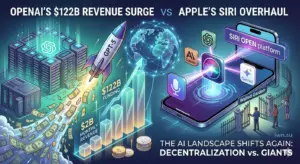
- OpenAI’s $122B Surge and Apple’s Siri Overhaul: The…
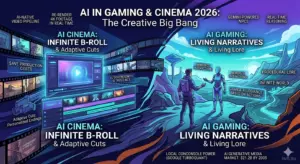
- AI Cinema & Gaming 2026: From Static Worlds to…
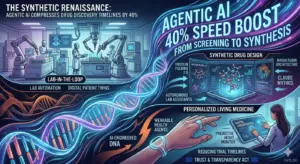
- The Synthetic Renaissance: Agentic AI Compresses…
- Aries Horoscope for 2026

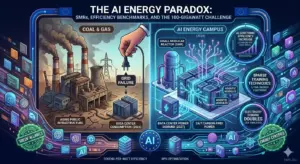
- The Energy Paradox: Can AI Scale Without Melting the Grid?
- Claude Mythos Released: Anthropic’s 10-Trillion…
- Physical AI 2026: Tesla Optimus Gen 3 Enters…
- Beyond Copilots: How Autonomous AI Agents are…
- Happy Birthday April

- Evening Horoscope for December 13, 2025

- EU Mandates "AI Passports" and Restricts Chip…

- Taurus Horoscope 2026 — A Year of Steady Growth,…
